Statistics show that Malawi has one of the lowest electricity access rates in the world with several inequalities between the rural and urban populace. However, initiatives are being put in place to connect more households, writes LUCKY MKANDAWIRE.
In 2009, the Mulanje Electricity Generation Agency (Mega) began construction of the country’s first mini-grid on Mulanje Mountain.
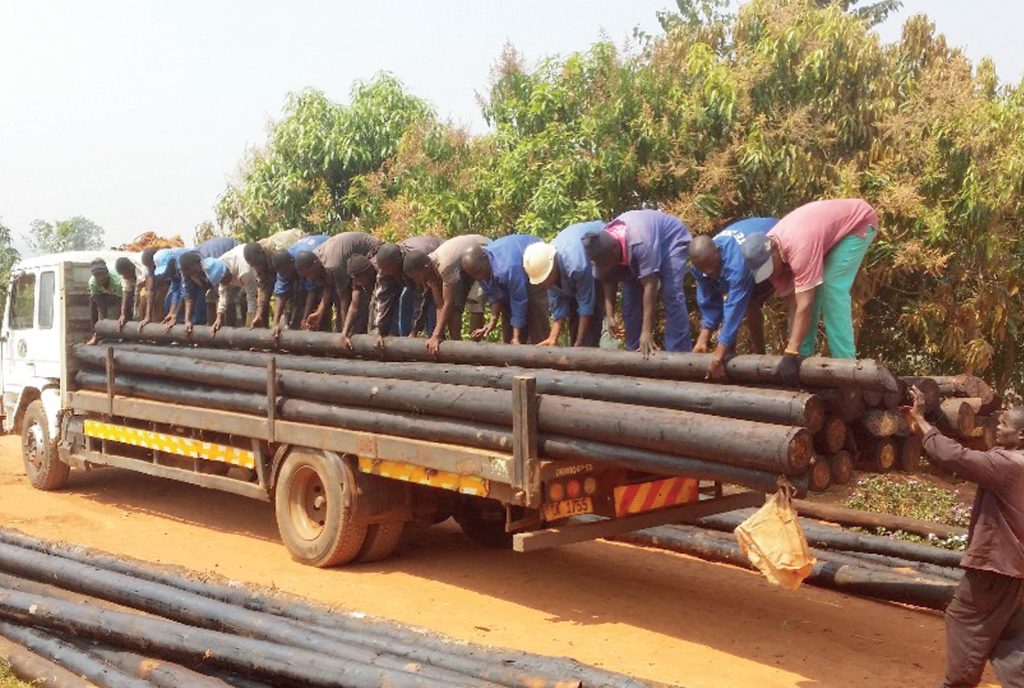
The agency, with 99 percent shareholding for Mulanje Mountain Conservation Trust (MMCT) and one percent belonging to the community, was established with the sole purpose of operating and maintaining micro-hydro schemes around the mountain.
By 2013 generat ion and distribution of hydro electricity from Lichenya River started at its Bondo mini grid.
Today, Mega has a total hydro capacity of 330 kW with 2 120 existing customer connections covering 1 500 households , 500 businesses and 120 social connections in 26 villages under Senior Chief Mabuka.
According to Mega operations manager Samuel Mambo, the project benefits over 10 000 people through electricity connections to two public health facilities, nine primary schools and four secondary schools, among others.
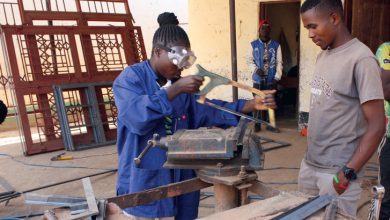
Privately, the mini grid connects 13 maize mills, over 50 churches, over 100 groceries, several welding shops, barber shops, hair saloons and many more.
“The project has greatly improved the local economy of the area where businesses that create job opportunities are flourishing. We have also greatly improved the education and health for the area.
“Before electricity, teachers and health personnel were not interested to work in the area which is very remote but today, many of them are interested to work in the area,” says Mambo.
With Malawi being one of the least electrified countries globally, energy experts feel such projects create opportunities for the rural population to access electricity and other energy demands.
As of June this year, approximately 28 percent of the countr y ’s population had access to electricity with 11.4 percent connected to the grid and 6.6 percent using off-grid energy solutions.
Last month, Mega, which is heralded as a potential model for future electricity generation in rural Malawi, launched a grid expansion project which will see 600 more households and businesses being connected to its mini grid by September 2027.
The initiative, with a K450 million funding from United States African Development Foundation (Usadf), aims to power three more villages of Michenga, Makaula and Mgwezu and extends transmission and distribution for a distance of eight kilometer.
But besides providing widely available, sustainable, affordable, and clean energy to communities surrounding the mountain, Mega is also concerned with environmental conservation.
“One of the key elements in this project is the preservation of the mountain’s already fragile ecosystem through reduction of deforestation and dependence on traditional energy sources,” says Mambo.
Mega believes, according to Mambo, the provision of reliable source of energy to the mountain’s surrounding communities for cooking and home lighting has contributed towards preventing people from depleting the trees from the mountain.
“So this is not just about providing electricity to the people but also creating a sustainable future for communities while protecting the natural beauty and biodiversity of our Mulanje Mountain,” he explains.
Mambo says climate change has sometimes made electricity generation difficult either due to low water levels brought by high temperatures or flooding which lead to blocking of water flow in penstocks because of increased debri.
“Our project has a water shade management program through which various clubs concerned with tree planting were formed within the communities. These clubs get support in terms of seedlings from MMCT and Sukambizi Tea Association of Lujeri Tea Estate,” he says.
Through the Usadf project, Mega will also connect the Inde- Agroprocessing Industry which has been constructed by MMCT in Michenga village.
This processing facility will be the main off taker of Mega electricity and in turn will make the project more sustainable, according to Mambo.
He says the agro processing facility will provide market and incentives for the communities who will be supplying various fruits thereby encouraging environmental sustainability.
“The facility will encourage the communities to grow and take care of fruit trees and various forests products such as bees for honey,” says the operations manager.
Group Village Head Nande says the electricity project has also improved students’ grades in class compared to the past as they are now able to study during long hours.
Further, he observes expectant mothers no longer travel for long distance to access improved health care due to electricity.
Meanwhile, Mega has embarked on forming partnerships to make the project more sustainable.
Already, it has partnered with Anzana Electric Group, regional developers of hydro power plants working in five countries including Malawi, to upgrade Mega generation.
“This will make our project much more sustainable as we aim to connect 10 000 households in Mulanje and sell the excess power to Escom,” says mambo.
Mega is already in discussions with Escom about a possible agreement in terms of power purchase.
On her part, Usadf country programme coordinator Linda Ndovi Jere salutes Mega’s focus on long term environmental and economic advantages of the project.
She states using electricity for valuable intentions such as agro-processing exhibits Mega’s forethought toward climate action and economic empowerment for the communities.
She says: “When Mega applied for the grant what fascinated us was the productive use of energy they proposed that the community around here want to embark on.
“So this project will not only be about electricity but also improvement of the livelihoods of local communities.”
Mzuzu based youth environmental advocate Vera Phiri says expanding access to electricity in rural areas can help reduce deforestation in Malawi by reducing use of biomass for energy.
The ex-Mzuzu University (Mzuni) student says electricity provision to rural areas can greatly help reduce deforestation as demand for wood fuel and charcoal will be reduced.
Recently the World Bank warned that the universal electricity access target by 2030 will remain an ambitious target if the country does not break away from the pattern of slow progress and financing and sector coordination.
In its 17th Malawi Economic Monitor the World Bank emphasised on the need for expanding the grid and fast growth of the off grid solar market to achieve universal access.
The bank further observed that the country needs about $3 billion (over K5 trillion) to meet targets for energy connections and demands prescribed in Malawi 206, the country’s long term development strategy.
Malawi requires 1000 megawatts (MW) b u t currently it has a total capacity of around 450 MW from hydro power plant s and thermal power plants.